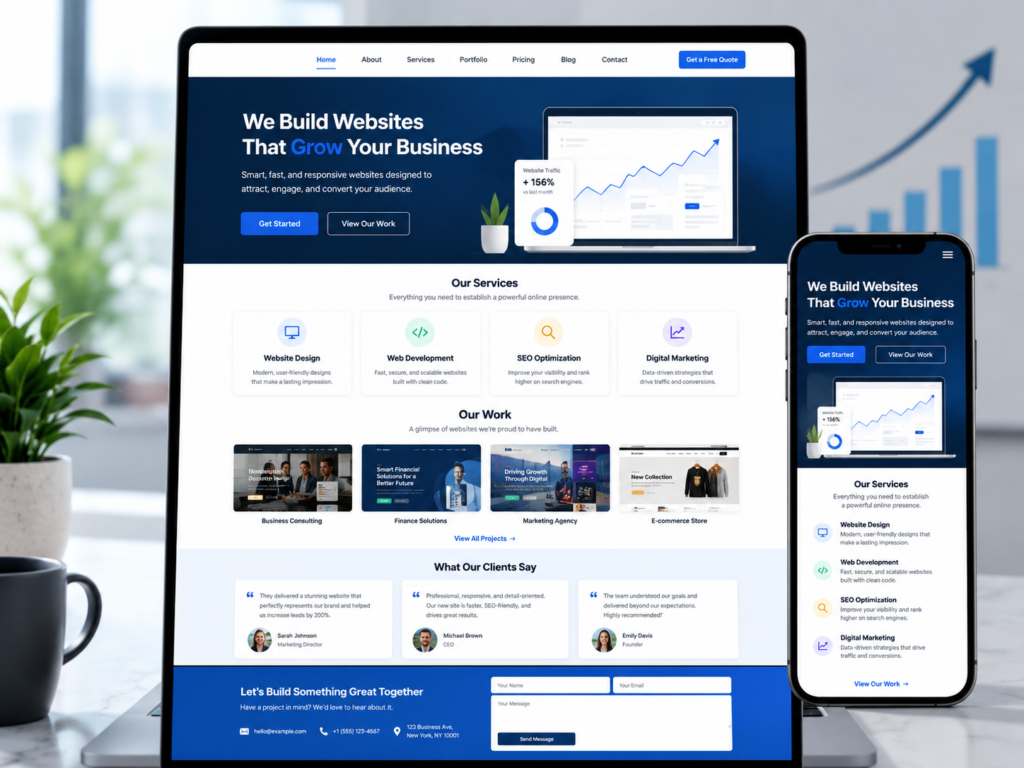
In today’s digital era, having a website is no longer just an additional business tool. A website has become an important part of business growth, especially for companies that want to reach more customers and expand their target market. Through a website, a business can introduce its products, services, brand identity, and advantages to a wider audience without being limited by location or operating hours.
Whether the business is small, medium, or large, a professional website can help attract new customers, build trust, and open bigger opportunities for sales growth.
1. Reaching Customers Beyond Local Areas
One of the biggest benefits of a website is its ability to reach customers outside the local area. Without a website, a business usually depends on walk-in customers, physical stores, or offline promotions. However, with a website, people from different cities, regions, or even countries can discover the business easily.
For example, a furniture store, hotel, electronics shop, or service provider can display its products and information online. This allows potential customers to learn about the business before visiting the store or making a purchase.
2. Available 24 Hours a Day
A website works like a digital store that is open 24 hours a day. Customers can access information anytime, whether in the morning, afternoon, or late at night. This is very useful because every customer has different browsing habits.
Even when the business is closed, the website can still provide product details, service information, contact forms, location, prices, promotions, and frequently asked questions. As a result, businesses do not miss opportunities to attract potential buyers.
3. Helping Businesses Appear More Professional
A well-designed website can make a business look more professional and trustworthy. Many customers today search online before deciding to buy a product or use a service. When they find a clear, informative, and attractive website, they are more likely to trust the business.
A professional website can include company profiles, product catalogs, customer testimonials, portfolios, contact information, and business achievements. These elements help create a positive first impression.
4. Supporting Digital Marketing Strategies
A website is a strong foundation for digital marketing. Businesses can connect their website with SEO, Google Ads, social media, email marketing, and online campaigns. Through these strategies, the website can attract more visitors and convert them into customers.
For example, when people search for certain keywords on Google, a website with good SEO has a higher chance of appearing in search results. This helps the business reach people who are already interested in related products or services.
5. Making Product and Service Information Easier to Access
A website allows businesses to present complete information in an organized way. Customers can easily find product descriptions, benefits, specifications, prices, photos, videos, and how to order.
This makes the buying process easier because customers can compare options and understand the value of the products before contacting the seller. Clear information can also reduce repeated questions and help customers make faster decisions.
6. Increasing Sales Opportunities
By expanding the target market, a website can also increase sales opportunities. More people can discover the business, explore its products, and make inquiries. If the website is supported by attractive visuals, easy navigation, and clear call-to-action buttons, visitors are more likely to take action.
Examples of useful call-to-action buttons include “Contact Us,” “Order Now,” “Book Now,” “Get a Quote,” or “View Products.” These simple features can guide customers toward making a purchase.
7. Building Brand Awareness
A website helps businesses introduce their brand to a wider audience. Through consistent design, colors, logo, content, and messaging, customers can recognize the business more easily.
The more often people see and visit the website, the stronger the brand awareness becomes. This is important because customers usually prefer brands that they recognize and trust.
8. Competing with Other Businesses
In a competitive market, having a website can help a business stay relevant. Many competitors are already using websites to attract customers online. Without a website, a business may lose potential customers to competitors that are easier to find on the internet.
A modern and informative website gives businesses a better chance to compete, especially in industries where customers often search online before buying.
9. Collecting Customer Data and Insights
A website can also help businesses understand customer behavior. With analytics tools, business owners can see how many people visit the
A website plays an important role in expanding the target market. It helps businesses reach more customers, build trust, support digital marketing, provide complete information, and increase sales opportunities. In a competitive digital era, a website is not only a promotional tool but also a powerful asset for long-term business growth.
